

.Big holes in Swiss cheese are made by a:
(1) a machine
(2) a bacterium that produces methane gas
(3) a bacterium producing a large amount of carbon dioxide
(4) a fungus that releases a lot of gases during its metabolic activites.
.
.
Answer ▽ ✅Verified
(3) a bacterium producing a large amount of carbon dioxide
microbes were used. Different varieties of cheese are known by their
characteristic texture, flavour and taste, the specificity coming from the
microbes used. For example, the large holes in ‘Swiss cheese’ are due to
production of a large amount of CO2 by a bacterium named
Propionibacterium sharmanii. The ‘Roquefort cheese’ are ripened by
growing a specific fungi on them, which gives them a particular flavour.
⬆️Prev____@organised notes_____Next⬇️
.Match the following list of bacteria and their commercially important products:
| Bacterium |
| Product |
(i) | Aspergullus niger | (a) | Lactic acid |
(ii) | Acetobacter aceti | (b) | Butyric acid |
(iii) | Clostridium Butylicum | (c) | Acetic acid |
(iv) | Lactobacillus | (d) | Citric Acid |
Choose the correct match:
(1) (i) - b, (ii) - c, (iii) - d, (iv) - a
(2) (i) - b, (ii) - d, (iii) - c, (iv) - a
(3) (i) - d, (ii) - c, (iii) - b, (iv) - a
(4) (i) - d, (ii) - a, (iii) - c, (iv) - b
.
.
Answer ▽ ✅Verified
(3) (i) - d, (ii) - c, (iii) - b, (iv) - a
Chemicals, Enzymes and other Bioactive Molecules
Microbes are also used for commercial and industrial production of
certain chemicals like organic acids, alcohols and enzymes. Examples of
acid producers are Aspergillus niger (a fungus) of citric acid, Acetobacter
aceti (a bacterium) of acetic acid; Clostridium butylicum (a bacterium) of
butyric acid and Lactobacillus (a bacterium) of lactic acid.
Yeast (Saccharomyces cerevisiae) is used for commercial production
of ethanol. Microbes are also used for production of enzymes. Lipases are
used in detergent formulations and are helpful in removing oily stains
from the laundry. You must have noticed that bottled fruit juices bought
from the market are clearer as compared to those made at home. This is
because the bottled juices are clarified by the use of pectinases and
proteases. Streptokinase produced by the bacterium Streptococcus and
modified by genetic engineering is used as a ‘clot buster’ for removing
clots from the blood vessels of patients who have undergone myocardial
infarction leading to heart attack.
Another bioactive molecule, cyclosporin A, that is used as an
immunosuppressive agent in organ-transplant patients, is produced by
the fungus Trichoderma polysporum. Statins produced by the yeast
Monascus purpureus have been commercialised as blood-cholesterol
lowering agents. It acts by competitively inhibiting the enzyme responsible
for synthesis of cholesterol.
⬆️Prev____@organised notes_____Next⬇️
.The free-living fungus Trichoderma can be used for:
(1) killing insects
(2) biological control of plant diseases
(3) controlling butterfly caterpillars
(4) producing antibiotics
.
.
Answer ▽ ✅Verified
(2) biological control of plant diseases
Deuteromycetes
Commonly known as imperfect fungi because only the asexual orvegetative phases of these fungi are known. When the sexual forms of
these fungi were discovered they were moved into classes they rightly
belong to. It is also possible that the asexual and vegetative stage have
been given one name (and placed under deuteromycetes) and the sexual
stage another (and placed under another class). Later when the linkages
were established, the fungi were correctly identified and moved out of
deuteromycetes. Once perfect (sexual) stages of members of
dueteromycetes were discovered they were often moved to ascomycetes
and basidiomycetes. The deuteromycetes reproduce only by asexual spores
known as conidia. The mycelium is septate and branched. Some members
are saprophytes or parasites while a large number of them are
decomposers of litter and help in mineral cycling. Some examples are
Alternaria, Colletotrichum and Trichoderma.
Chemicals, Enzymes and other Bioactive Molecules
Microbes are also used for commercial and industrial production ofcertain chemicals like organic acids, alcohols and enzymes. Examples of
acid producers are Aspergillus niger (a fungus) of citric acid, Acetobacter
aceti (a bacterium) of acetic acid; Clostridium butylicum (a bacterium) of
butyric acid and Lactobacillus (a bacterium) of lactic acid.
Yeast (Saccharomyces cerevisiae) is used for commercial production
of ethanol. Microbes are also used for production of enzymes. Lipases are
used in detergent formulations and are helpful in removing oily stains
from the laundry. You must have noticed that bottled fruit juices bought
from the market are clearer as compared to those made at home. This is
because the bottled juices are clarified by the use of pectinases and
proteases. Streptokinase produced by the bacterium Streptococcus and
modified by genetic engineering is used as a ‘clot buster’ for removing
clots from the blood vessels of patients who have undergone myocardial
infarction leading to heart attack.
Another bioactive molecule, cyclosporin A, that is used as an
immunosuppressive agent in organ-transplant patients, is produced by
the fungus Trichoderma polysporum. Statins produced by the yeast
Monascus purpureus have been commercialised as blood-cholesterol
lowering agents. It acts by competitively inhibiting the enzyme responsible
MICROBES AS BIOCONTROL AGENTS
⬆️Prev____@organised notes_____Next⬇️
.Identify the incorrectly matched pair
1. | Baculoviruses | Species specific, broad spectrum insecticides |
2. | Trichoderma | Free living fungi common in root ecosystems |
3. | Ladybird | Biocontrol of aphids |
4. | Organic farming | Pests kept at manageable levels rather than completely eradicated |
.
.
Answer ▽ ✅Verified
1. | Baculoviruses | Species specific, broad spectrum insecticides |
MICROBES AS BIOCONTROL AGENTS
and Dragonflies are useful to get rid of aphids and mosquitoes,
respectively. An example of microbial biocontrol agents that can be
introduced in order to control butterfly caterpillars is the bacteria Bacillus
thuringiensis (often written as Bt ). These are available in sachets as dried
spores which are mixed with water and sprayed onto vulnerable plants
such as brassicas and fruit trees, where these are eaten by the insect
larvae. In the gut of the larvae, the toxin is released and the larvae get
killed. The bacterial disease will kill the caterpillars, but leave other insects
unharmed. Because of the development of methods of genetic engineering
in the last decade or so, the scientists have introduced B. thuringiensis
toxin genes into plants. Such plants are resistant to attack by insect pests.
Bt-cotton is one such example, which is being cultivated in some states
of our country.
⬆️Prev____@organised notes_____Next⬇️
.Identify the incorrect matched pair:
(1) Trichoderma harzianum: Cyclosporin A
(2) Monascus purpureus: Statins
(3) Aspergillus niger: Citric acid
(4) Streptococcus pyogenes: Clot buster
.
.
Answer ▽ ✅Verified
(1) Trichoderma harzianum: Cyclosporin A
Chemicals, Enzymes and other Bioactive Molecules
Microbes are also used for commercial and industrial production ofcertain chemicals like organic acids, alcohols and enzymes. Examples of
acid producers are Aspergillus niger (a fungus) of citric acid, Acetobacter
aceti (a bacterium) of acetic acid; Clostridium butylicum (a bacterium) of
butyric acid and Lactobacillus (a bacterium) of lactic acid.
Yeast (Saccharomyces cerevisiae) is used for commercial production
of ethanol. Microbes are also used for production of enzymes. Lipases are
used in detergent formulations and are helpful in removing oily stains
from the laundry. You must have noticed that bottled fruit juices bought
from the market are clearer as compared to those made at home. This is
because the bottled juices are clarified by the use of pectinases and
proteases. Streptokinase produced by the bacterium Streptococcus and
modified by genetic engineering is used as a ‘clot buster’ for removing
clots from the blood vessels of patients who have undergone myocardial
infarction leading to heart attack.
Another bioactive molecule, cyclosporin A, that is used as an
immunosuppressive agent in organ-transplant patients, is produced by
the fungus Trichoderma polysporum. Statins produced by the yeast
Monascus purpureus have been commercialised as blood-cholesterol
lowering agents. It acts by competitively inhibiting the enzyme responsible
for synthesis of cholesterol.
⬆️Prev____@organised notes_____Next⬇️
.Identify the incorrectly matched pair:
1 | Streptococcus | Clot buster |
2. | Monascus purpureus | Statins |
3. | Trichoderma harziamum | Immunosuppressant |
4. | Aspergillus niger | Citric acid |
.
.
Answer ▽ ✅Verified
3. | Trichoderma harziamum | Immunosuppressant |
Chemicals, Enzymes and other Bioactive Molecules
Microbes are also used for commercial and industrial production ofcertain chemicals like organic acids, alcohols and enzymes. Examples of
acid producers are Aspergillus niger (a fungus) of citric acid, Acetobacter
aceti (a bacterium) of acetic acid; Clostridium butylicum (a bacterium) of
butyric acid and Lactobacillus (a bacterium) of lactic acid.
Yeast (Saccharomyces cerevisiae) is used for commercial production
of ethanol. Microbes are also used for production of enzymes. Lipases are
used in detergent formulations and are helpful in removing oily stains
from the laundry. You must have noticed that bottled fruit juices bought
from the market are clearer as compared to those made at home. This is
because the bottled juices are clarified by the use of pectinases and
proteases. Streptokinase produced by the bacterium Streptococcus and
modified by genetic engineering is used as a ‘clot buster’ for removing
clots from the blood vessels of patients who have undergone myocardial
infarction leading to heart attack.
Another bioactive molecule, cyclosporin A, that is used as an
immunosuppressive agent in organ-transplant patients, is produced by
the fungus Trichoderma polysporum. Statins produced by the yeast
Monascus purpureus have been commercialised as blood-cholesterol
lowering agents. It acts by competitively inhibiting the enzyme responsible
for synthesis of cholesterol.
⬆️Prev____@organised notes_____Next⬇️
.Baculoviruses are:
1. Species specific, narrow spectrum insecticides
2. Species specific, broad spectrum insecticides
3. Non specific, narrow spectrum inseticides
4. Non specific, broad spectrum insecticides
.
.
Answer ▽ ✅Verified
1. Species specific, narrow spectrum insecticides
MICROBES AS BIOCONTROL AGENTS
and Dragonflies are useful to get rid of aphids and mosquitoes,
respectively. An example of microbial biocontrol agents that can be
introduced in order to control butterfly caterpillars is the bacteria Bacillus
thuringiensis (often written as Bt ). These are available in sachets as dried
spores which are mixed with water and sprayed onto vulnerable plants
such as brassicas and fruit trees, where these are eaten by the insect
larvae. In the gut of the larvae, the toxin is released and the larvae get
killed. The bacterial disease will kill the caterpillars, but leave other insects
unharmed. Because of the development of methods of genetic engineering
in the last decade or so, the scientists have introduced B. thuringiensis
toxin genes into plants. Such plants are resistant to attack by insect pests.
Bt-cotton is one such example, which is being cultivated in some states
of our country.
⬆️Prev____@organised notes_____Next⬇️
.The virus shown here is a causative agent of :
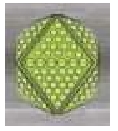
1. Intestinal infections
2. Respiratory infections
3. CNS infections
4. Genito-urinary infections
.
.
Answer ▽ ✅Verified
2. Respiratory infections

⬆️Prev____@organised notes_____Next⬇️
.Consider the following statements:
I. Statins, used as blood cholesterol lowering agents, are derived from Monascus purpureus
II. Cyclosporin A, derived from Trichoderma, is used as an immunosuressent
III. Baculoviruses, in the genus Nucleopolyhederovirus, are species specific, broad spectrum insecticides
Which of the above statements are true?
1. I and II only
2. I and III only
3. II and III only
4. I, II and III
.
.
Answer ▽ ✅Verified
1. I and II only
MICROBES AS BIOCONTROL AGENTS
and Dragonflies are useful to get rid of aphids and mosquitoes,
respectively. An example of microbial biocontrol agents that can be
introduced in order to control butterfly caterpillars is the bacteria Bacillus
thuringiensis (often written as Bt ). These are available in sachets as dried
spores which are mixed with water and sprayed onto vulnerable plants
such as brassicas and fruit trees, where these are eaten by the insect
larvae. In the gut of the larvae, the toxin is released and the larvae get
killed. The bacterial disease will kill the caterpillars, but leave other insects
unharmed. Because of the development of methods of genetic engineering
in the last decade or so, the scientists have introduced B. thuringiensis
toxin genes into plants. Such plants are resistant to attack by insect pests.
Bt-cotton is one such example, which is being cultivated in some states
of our country.
Chemicals, Enzymes and other Bioactive Molecules
Microbes are also used for commercial and industrial production ofcertain chemicals like organic acids, alcohols and enzymes. Examples of
acid producers are Aspergillus niger (a fungus) of citric acid, Acetobacter
aceti (a bacterium) of acetic acid; Clostridium butylicum (a bacterium) of
butyric acid and Lactobacillus (a bacterium) of lactic acid.
Yeast (Saccharomyces cerevisiae) is used for commercial production
of ethanol. Microbes are also used for production of enzymes. Lipases are
used in detergent formulations and are helpful in removing oily stains
from the laundry. You must have noticed that bottled fruit juices bought
from the market are clearer as compared to those made at home. This is
because the bottled juices are clarified by the use of pectinases and
proteases. Streptokinase produced by the bacterium Streptococcus and
modified by genetic engineering is used as a ‘clot buster’ for removing
clots from the blood vessels of patients who have undergone myocardial
infarction leading to heart attack.
Another bioactive molecule, cyclosporin A, that is used as an
immunosuppressive agent in organ-transplant patients, is produced by
the fungus Trichoderma polysporum. Statins produced by the yeast
Monascus purpureus have been commercialised as blood-cholesterol
lowering agents. It acts by competitively inhibiting the enzyme responsible
for synthesis of cholesterol.
⬆️Prev____@organised notes_____Next⬇️
.
A. Saccharomyces cerevisiae | 1. Production of immunosuppressive agents |
B. Monascus purpureus | 2. Ripening of Swiss Cheese |
C. Trichoderma polysporum | 3. Commercial production of ethanol |
D. Propionibacterium sharrmanii | 4. Production of blood-cholesterol lowering agents |
Codes
| A | B | C | D |
(1) | 3 | 4 | 1 | 2 |
(2) | 4 | 3 | 2 | 1 |
(3) | 4 | 2 | 1 | 3 |
(4) | 3 | 1 | 4 | 2 |
.
.
Answer ▽ ✅Verified
A | B | C | D | |
(1) | 3 | 4 | 1 | 2 |
MICROBES IN HOUSEHOLD PRODUCTS
MICROBES AS BIOCONTROL AGENTS
and Dragonflies are useful to get rid of aphids and mosquitoes,
respectively. An example of microbial biocontrol agents that can be
introduced in order to control butterfly caterpillars is the bacteria Bacillus
thuringiensis (often written as Bt ). These are available in sachets as dried
spores which are mixed with water and sprayed onto vulnerable plants
such as brassicas and fruit trees, where these are eaten by the insect
larvae. In the gut of the larvae, the toxin is released and the larvae get
killed. The bacterial disease will kill the caterpillars, but leave other insects
unharmed. Because of the development of methods of genetic engineering
in the last decade or so, the scientists have introduced B. thuringiensis
toxin genes into plants. Such plants are resistant to attack by insect pests.
Bt-cotton is one such example, which is being cultivated in some states
of our country.
Chemicals, Enzymes and other Bioactive Molecules
Microbes are also used for commercial and industrial production ofcertain chemicals like organic acids, alcohols and enzymes. Examples of
acid producers are Aspergillus niger (a fungus) of citric acid, Acetobacter
aceti (a bacterium) of acetic acid; Clostridium butylicum (a bacterium) of
butyric acid and Lactobacillus (a bacterium) of lactic acid.
Yeast (Saccharomyces cerevisiae) is used for commercial production
of ethanol. Microbes are also used for production of enzymes. Lipases are
used in detergent formulations and are helpful in removing oily stains
from the laundry. You must have noticed that bottled fruit juices bought
from the market are clearer as compared to those made at home. This is
because the bottled juices are clarified by the use of pectinases and
proteases. Streptokinase produced by the bacterium Streptococcus and
modified by genetic engineering is used as a ‘clot buster’ for removing
clots from the blood vessels of patients who have undergone myocardial
infarction leading to heart attack.
Another bioactive molecule, cyclosporin A, that is used as an
immunosuppressive agent in organ-transplant patients, is produced by
the fungus Trichoderma polysporum. Statins produced by the yeast
Monascus purpureus have been commercialised as blood-cholesterol
lowering agents. It acts by competitively inhibiting the enzyme responsible
for synthesis of cholesterol.
Fermented Beverages
Microbes especially yeasts have been used fromtime immemorial for the production of beverages
like wine, beer, whisky, brandy or rum. For this
purpose the same yeast Saccharomyces
cerevisiae used for bread-making and
commonly called brewer’s yeast, is used for
fermenting malted cereals and fruit juices, to
produce ethanol. Do you recollect the metabolic
reactions, which result in the production of
ethanol by yeast? Depending on the type of the
raw material used for fermentation and the type
of processing (with or without distillation)
different types of alcoholic drinks are obtained.
Wine and beer are produced without distillation
whereas whisky, brandy and rum are produced
by distillation of the fermented broth.
⬆️Prev____@organised notes____End