
A potential divider is used to give outputs of 2 V and 3 V from a 5 V source, as shown in the figure. Which combination of resistances R 1 , R 2 , and R 3 R1, R2, and R3 give the correct voltages? 1. R 1 = 1 kΩ , R 2 = 1 kΩ , R 3 = 2 kΩ R1=1 kΩ, R2 =1 kΩ, R3 = 2 kΩ 2. R 1 = 2 kΩ , R 2 = 1 kΩ , R 3 = 2 kΩ R1=2 kΩ, R2 =1 kΩ, R3 = 2 kΩ 3. R 1 = 1 kΩ , R 2 = 2 kΩ , R 3 = 2 kΩ R1=1 kΩ, R2 =2 kΩ, R3 = 2 kΩ 4. R 1 = 3 kΩ , R 2 = 2 kΩ , R 3 = 2 kΩ R1=3 kΩ, R2 =2 kΩ, R3 = 2 kΩ


 Question:  From NCERT  | NEET   || [Difficult level:Medium] Subtopic:Resistors | || 

:A potential divider is used to give outputs of 2 V and 3 V from a 5 V source, as shown in the figure.
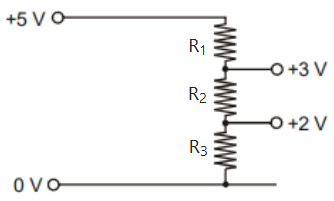
                                  

Which combination of resistances R1, R2, and R3 give the correct voltages?

1.  R1=1 , R2 =1 , R3 = 2 

2.  R1=2 , R2 =1 , R3 = 2 

3.  R1=1 , R2 =2 , R3 = 2 

4.  R1=3 , R2 =2 , R3 = 2 


Answer: 2.  


......

::

::

How important is Physics NCERT for NEET?

It's more than enough for theory. For MCQs practice NCERT Based Easy and Medium Questions mainly.

Show NEET 2021 Physics paper reference from NCERT
Is everything free in OrganisedNotes.blogspot.com

Yes,always.