

3-Hexyne can be converted to trans-3-Hexene by the action of:
1. - Pd/
2. Li-Liq.
3. - Pt
4.
.
.
Answer ▽ ✅Verified
⬆️Prev____@organised notes_____Next⬇️
.Which of the following organic compounds has same hybridisation as its combustion product -(CO2)?
1. Ethane
2. Ethyne
3. Ethene
4. Ethanol
.
.
Answer ▽ ✅Verified
2. Ethyne
⬆️Prev____@organised notes_____Next⬇️
.
A (Predominantly) is
(1)
(2)
(3)
(4)
.
.
Answer ▽ ✅Verified
(2)
⬆️Prev____@organised notes_____Next⬇️
.The order of decreasing reactivity towards an electrophilic reagent, for the following:-
(i) Benzene
(ii) Toluene
(iii) Chlorobenzene
(iv) Phenol
would be:-
(1) (i) > (ii) > (iii) > (iv)
(2) (ii) > (iv) > (i) > (iii)
(3) (iv) > (iii) > (ii) > (i)
(4) (iv) > (ii) > (i) > (iii)
.
.
Answer ▽ ✅Verified
(4) (iv) > (ii) > (i) > (iii)
⬆️Prev____@organised notes_____Next⬇️
.
.The number of isomeric sodium salt of acid that will be required to obtain neopentane is-
1. 3
2. 1
3. 4
4. 6
.
Answer ▽ ✅Verified
2. 1

⬆️Prev____@organised notes_____Next⬇️
.Which of the following compounds shall not produce propene by reaction with HBr followed by elimination or direct only elimination reaction?
1.
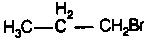
2.

3.
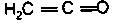
4.
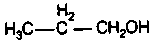
.
.
Answer ▽ ✅Verified
3.

⬆️Prev____@organised notes_____Next⬇️
.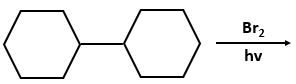
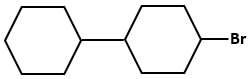
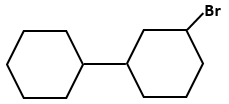
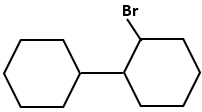
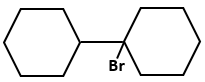
The major product in the above mentioned reaction is -
1.
2.
3.
4.
.
.
Answer ▽ ✅Verified
4.
⬆️Prev____@organised notes_____Next⬇️
.1,2-dibromopropane on treatment with X moles of
followed by treatment with ethyl bromine gave a pent-2-yne, the value of X is -
1. 1
2. 2
3. 3
4. 4
.
.
Answer ▽ ✅Verified
3. 3
⬆️Prev____@organised notes_____Next⬇️
.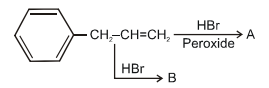
The main product A and B in the above mentioned reaction are respectively-
1.
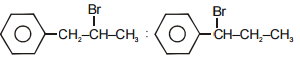
2.
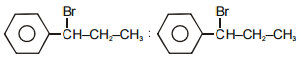
3. 
4. 
.
.
Answer ▽ ✅Verified
3.
⬆️Prev____@organised notes_____Next⬇️
.Elimination reaction of 2-Bromopentane to form pent-2-ene is-
(a) -Elimination reaction
(b) Follows Zaitsev rule
(c) Dehydrohalogenation reaction
(d) Dehydration reaction
1. (a), (c), (d)
2. (b), (c), (d)
3. (a), (b), (d)
4. (a), (b), (c)
.
.
Answer ▽ ✅Verified
4. (a), (b), (c)
.
⬆️Prev____@organised notes_____Next⬇️
.When ethyl bromide and n-propyl bromide is allowed
to react with sodium, in ether, they form
(1) mixture of four alkanes
(2) mixture of three alkanes
(3) mixture of two alkanes
(4) single alkane
.
.
Answer ▽ ✅Verified
(2) mixture of three alkanes
⬆️Prev____@organised notes_____Next⬇️
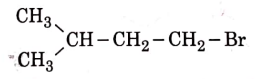
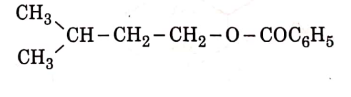
.The major product of the following chemical reaction is:

1.
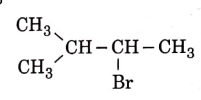
2.
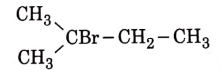
3.
4.
.
.
Answer ▽ ✅Verified
3.
⬆️Prev____@organised notes_____Next⬇️
.
.Reactant A in the following reaction is-
A + NaOH CH3CH2CH3 + Na2CO3
1. Sodium ethanoate
2. Sodium propanoate
3. Sodium butanoate
4. Sodium methanoate
.
Answer ▽ ✅Verified
3. Sodium butanoate